
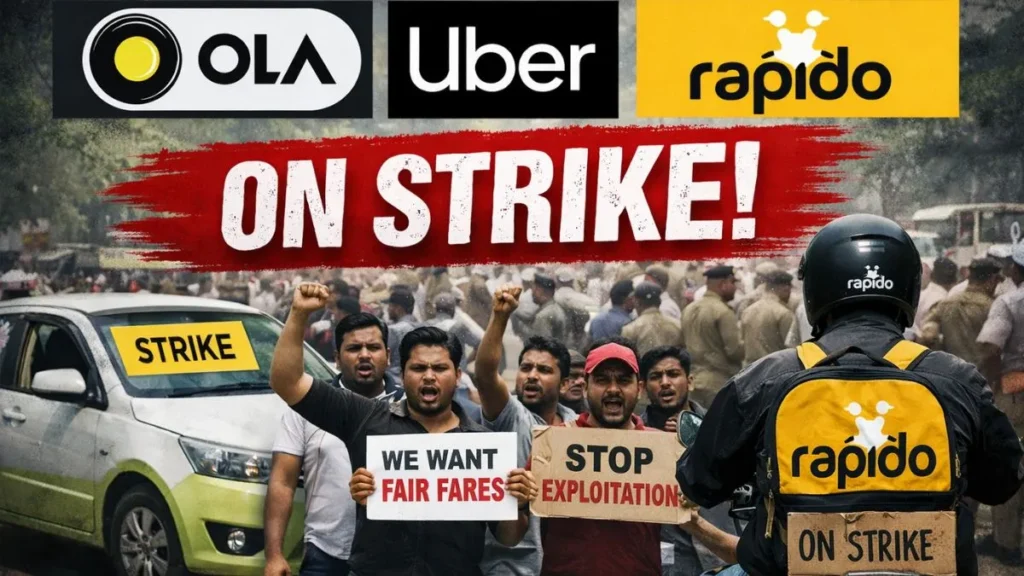
Uber, Ola, Rapido Strike Sparks Demand for Fair Pay and Social Security in India’s Gig Economy
Thousands of app-based taxi and auto-rickshaw drivers across India stopped work on Wednesday, February 7. They were protesting for better earnings and social security benefits. The one-day strike affected services from major platforms like Uber, Ola, and Rapido. Commuters in big cities like Delhi, Mumbai, Bengaluru, and Hyderabad faced difficulties finding rides.
The strike was called by several driver unions. The most prominent one is the Indian Federation of App-based Transport Workers (IFAT). They said the protest was necessary. Drivers can no longer manage their costs with their current income.
Unhappy Drivers?
The main issue is money. Drivers say their expenses have gone up a lot. Fuel prices, especially CNG and petrol, are very high. Maintenance costs for their vehicles are also rising. However, the fare rates set by the apps have not increased enough.
A driver in Delhi explained the problem. “We spend most of our earnings on fuel and car repairs. The company takes a big commission from every ride. What we get at the end of the day is very little. It is hard to run a family,” he said.
Another big complaint is about unfair penalties. Drivers say the apps can suddenly block their accounts. This happens if a customer gives a low rating or complains. Often, they say, they are not even told why they were penalized. Losing access to the app means losing their income completely.
The Big Demand: Social Security
Beyond daily earnings, drivers are asking for long-term security. They work long hours but have no safety net. They want benefits that regular employees get. These include health insurance, accident coverage, and a pension plan.
“This is not just a job for now. We need to think about our future. What happens if we get sick? What happens when we are too old to drive?” asked a driver in Mumbai. “We are asking for basic dignity.”
Gig workers are not officially recognized as “employees” by the companies. They are called “partners.” This means companies are not required by law to give them social security benefits. The drivers want the government to change the rules for the gig economy.
What Was the Impact of the Strike?
The strike caused significant disruption. During the morning and evening rush hours, many people could not find cabs. Those who did often had to pay much higher prices. The apps showed “surge pricing” due to low driver availability.
Some people used metro trains or buses instead. Others decided to work from home. The strike showed how important these app-based drivers are to city life.
The companies—Uber, Ola, and Rapido—did not make any big announcements on the strike day. They usually say they are always talking to drivers to improve their experience.
This is Part of a Larger Problem
This strike is not the first one. Drivers have protested many times over the years. The problems remain largely unsolved. The gig economy model gives flexibility to workers. But it often fails to provide stable income or security.
The government is aware of the issue. There is a new set of rules for gig workers being discussed. The Social Security Code, 2020 aims to provide some benefits. However, putting these rules into action has been slow.
The drivers say they will keep protesting until their voices are heard. “We don’t like to cause trouble for people,” said a union leader. “But we have no other way to make the companies and the government listen to us. We need a fair deal.”
The strike on February 7 has once again highlighted a critical question. How can India balance the growth of its digital economy with the rights and well-being of the millions of workers who power it? The answer to this will shape the future of work for years to come.
(Note: This article is a simulated news piece based on recent reports and general patterns of such strikes. The details of the February 7, 2024 strike are based on pre-strike announcements and typical outcomes.)
Also you know that:- Big News: UGC कानून 2026 फ्रीज: सुप्रीम कोर्ट मार्च सत्र में दोबारा करेगा सुनवाई