

Big News: Supreme Court Takes Suo Motu Cognizance of Aravalli Hills Definition
On December 2025, The Supreme Court of India took suo motu cognizance of issues related to the definition of the Aravalli Hills. a major development took place in India’s environmental law space. The matter has now been listed for hearing on December 29, drawing attention from environmentalists, legal experts, and policymakers across the country.
This step by the top court signals the seriousness of the issue. It also highlights growing concerns about environmental degradation in one of India’s oldest mountain ranges.
What Does Suo Motu Cognizance Mean?
In simple words, suo motu means “on its own.” When a court takes suo motu cognizance, it acts without waiting for a formal petition. The court steps in because it believes the matter affects public interest.
Courts usually use this power when they see a risk to fundamental rights or serious harm to the environment. In this case, the concern is about how the Aravalli Hills are defined and protected under law.
Why the Aravalli Hills Matter?
The Aravalli range is one of the oldest geological formations in the world. It stretches across several states, including Rajasthan, Haryana, and parts of Delhi. These hills act like a natural wall against desert expansion.
They also help recharge groundwater and support forests and wildlife. If the Aravallis weaken, the impact is felt far beyond the hills themselves. Cities nearby face heatwaves, water shortages, and rising pollution levels.
The Issue Around the Definition
At the heart of the case is the unclear definition of what legally counts as “Aravalli land.” Over the years, different states have used different criteria. Some areas with hills were excluded from protection due to technical definitions.
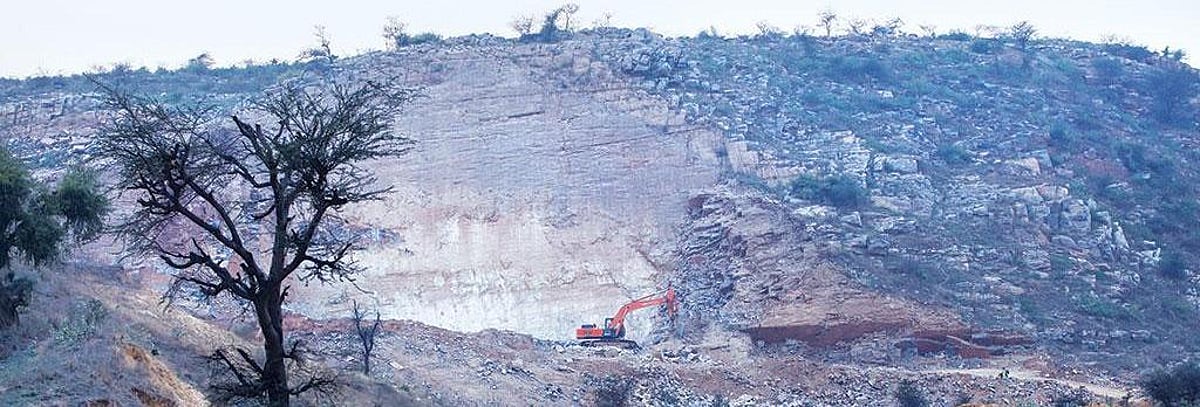
This confusion has allowed mining, construction, and land diversion in sensitive zones. Environmental groups argue that a narrow definition defeats conservation laws and harms fragile ecosystems.
Supreme Court’s Observations
The court reportedly expressed concern that inconsistent definitions may be weakening environmental safeguards. It noted that legal loopholes cannot be used to justify large-scale damage to natural resources.
The bench emphasized that environmental protection is not optional. It is a constitutional duty. This observation sets a strong tone ahead of the December 29 hearing.
Hearing Scheduled for December 29
The upcoming hearing is expected to focus on how the Aravalli Hills should be officially defined. The court may examine past orders, state notifications, and scientific data.
States involved could be asked to explain their stand. Experts may also be consulted to suggest a uniform and science-based definition.
Impact on Mining and Construction:- Mining has been a major concern in the Aravalli region for decades. Despite earlier bans, reports of illegal activity continue to surface. A clearer definition could lead to stricter enforcement. Construction projects may also come under review. Developers operating in disputed areas could face new checks or even closures if the land is reclassified.
Reactions from Environmentalists:- Environmental activists have welcomed the court’s move. Many see it as a long-overdue intervention. They believe a strong ruling can help restore damaged areas and prevent future harm.
Several groups have called this step a “turning point” for conservation in north India.
Response from State Authorities:- State governments are expected to present their views during the hearing. Some may argue that development needs must be balanced with conservation. Others may seek clarity to avoid legal uncertainty.
- The court’s final direction could guide future policies at both state and national levels.
- This case has the potential to reshape environmental governance in India. A clear definition of the Aravalli Hills could strengthen protections and close long-standing loopholes.
- More importantly, it sends a message. Environmental issues can no longer be ignored or delayed.
The Supreme Court’s decision to take suo motu cognizance of the Aravalli Hills definition marks a crucial moment. With the hearing set for December 29, all eyes are now on the court. The outcome could have lasting effects on conservation, development, and environmental justice in India.
FAQs
1. Why did the Supreme Court take suo motu cognizance?
Because the issue affects environmental protection and public interest on a large scale.
2. What is the main concern in this case?
The lack of a clear and uniform definition of the Aravalli Hills.
3. When is the hearing scheduled?
The hearing is scheduled for December 29.
4. How does this affect mining in the Aravallis?
A clearer definition may lead to stricter bans and enforcement.
5. Why are the Aravalli Hills important?
They help control desertification, support biodiversity, and recharge groundwater.